
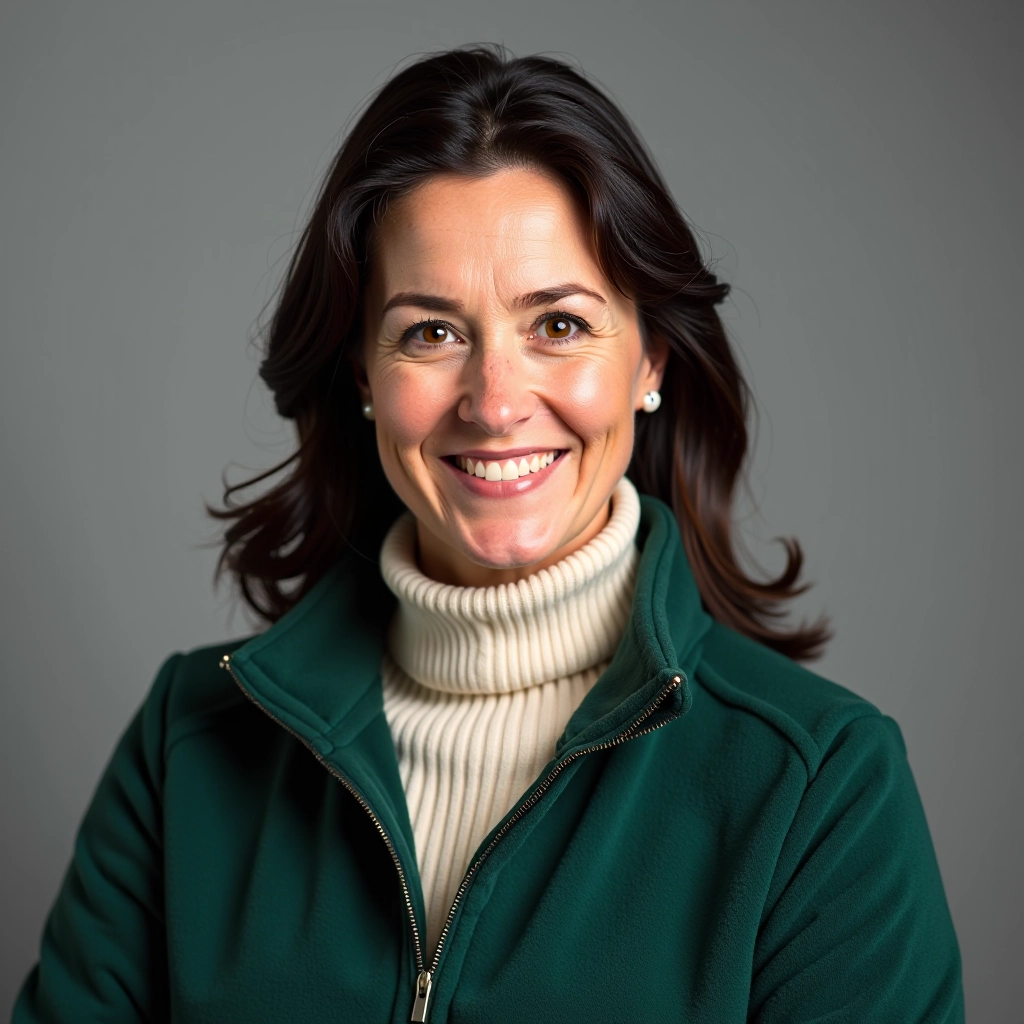
Siobhán O'Connor
Senior Hiking & Accessibility Editor
Specialising in accessible hiking routes across Ireland's karst landscapes, with 14 years of experience helping walkers of all abilities explore the Burren's distinctive terrain.
Area of Expertise
Limestone Karst Terrain
Deep knowledge of the Burren's unique geology and how to navigate its distinctive plateau landscape safely and enjoyably.
Senior-Friendly Routes
Specialising in gentle trails suitable for older adults and those with mobility considerations. Every route tested for accessibility and comfort.
Caher Valley Loops
Over 200 explorations of the Caher Valley's terraced landscape. She's mapped seasonal variations and identified the safest, most scenic passages through the terrain.
Inclusive Trail Design
Formal qualification in accessible trail design. She combines practical knowledge with genuine empathy for the challenges older walkers face.
Questions & Answers
How did you become interested in hiking and trail accessibility?
I grew up in Limerick, just south of the Burren plateau, so limestone terrain was my playground as a kid. But the real turning point came after university. I'd finished my Environmental Science degree at UCC and was working in conservation management when I met a 72-year-old hiker who'd given up walking because she couldn't find routes suited to her knees. That conversation stuck with me. I realised there was this gap — loads of amazing trails in Ireland, but not many genuinely designed with older walkers in mind. That's when I switched paths entirely.
What was your background before specialising in accessible trails?
After completing my degree in 2010, I spent five years as a guide with the Burren Outdoor Education Centre. That's where I developed the technical skills — learning the geology, understanding how to read the landscape, recognising risks. But more importantly, I learned how to adapt routes on the fly. You'd get groups with mixed abilities, and you'd need to find alternative paths or modify the difficulty in real time. That practical experience taught me things no qualification could have.
You have a formal qualification in accessible trail design. How did that come about?
In 2018, I completed a specialist qualification through the Irish Trails and Walking Federation. It was rigorous — not just about physical accessibility, but about understanding mobility issues, balance problems, cardiovascular limitations, joint strain. I studied things like optimal gradient percentages for different age groups, surface conditions that cause problems, how to design rest points that don't feel patronising. It formalised what I'd learned experientially, but it also pushed me to think more systematically about design.
The Caher Valley loop comes up a lot in your work. Why is that route so important to you?
I've hiked that loop over 200 times now. It's become a bit of an obsession, honestly. The Caher Valley's got this incredible terraced landscape — layers of limestone creating natural pathways — but it's also genuinely challenging to navigate. You've got uneven ground, sections that get muddy, some tricky descents. I've mapped how the terrain changes seasonally, where water collects in winter, which routes become impassable in wet weather, and which passages are genuinely safe for someone with limited balance. That intimate knowledge is what makes it possible to create a route that's accessible but still feels like a proper adventure, not a dumbed-down version of the walk.
What's your philosophy when designing routes for older walkers?
It's simple: accessibility doesn't mean boring. I'm not interested in creating flat, easy walks that feel patronising. I want to design routes that challenge walkers appropriately, that show them genuinely stunning landscape, that make them feel accomplished when they finish. That means paying attention to gradient, surface quality, sight lines, rest points, and weather exposure. But it also means being honest about what's involved. A walker deserves to know what they're getting into — not sugar-coated, not hidden. You give them the information, you design the route well, and you let them make the choice.
What's the biggest misconception about hiking for seniors?
That it's either a gentle stroll or it's not accessible. There's this false binary. People think accessibility means flattening everything, removing all challenge, treating older walkers like they're fragile. But that's not what I've seen. The older walkers I work with — they want to be challenged. They want to feel their legs working. They want to reach a viewpoint and feel like they've earned it. What they need is honesty about difficulty level, good trail design that doesn't create unnecessary obstacles, and maybe the option of a shorter variation if their knees are playing up that day. It's about choice and information, not about dumbing things down.
Experience & Credentials
Education
BSc Environmental Science
University College Cork (2006–2010)
Specialist Qualification in Accessible Trail Design
Irish Trails and Walking Federation (2018)
Professional Experience
Senior Hiking & Accessibility Editor
Qtann Ltd (2021–present)
Trail Guide & Education Specialist
Burren Outdoor Education Centre (2015–2021)
Conservation Manager
Various Irish environmental organisations (2010–2015)
Recognition
Recognised Authority on Accessible Hiking
Irish Trails and Walking Federation
14+ Years in Hiking & Outdoor Accessibility
Continuous professional practice and development
What Drives the Work
Siobhán's approach combines practical geological knowledge with genuine empathy for the challenges older walkers face. She doesn't believe in one-size-fits-all solutions. Instead, she designs routes that offer choice — a main path with variations, clear information about difficulty, and honest assessment of what's involved.
Her philosophy rests on a simple principle: nature should be accessible to everyone, regardless of age or ability. That doesn't mean making everything easier. It means being thoughtful about design, transparent about difficulty, and respectful of what walkers can achieve. She's seen 75-year-olds complete the Caher Valley loop with genuine joy. She's also seen younger, fitter walkers turn back because they weren't prepared for the terrain. The difference isn't fitness — it's good information and good trail design.
At qtann Ltd, she leads content creation for hiking and outdoor wellness, drawing on her deep knowledge of County Clare's terrain and her commitment to making nature accessible. She writes not as a distant expert, but as someone who's walked these routes hundreds of times, who knows where the challenges lie, and who genuinely wants others to experience what she loves about these landscapes.
"Accessibility isn't about removing challenge. It's about removing unnecessary obstacles so people can engage with the challenge that matters."
— Siobhán O'Connor
Articles & Guides
Explore Siobhán's writing on accessible hiking, the Burren's geology, and senior-friendly trail design.
Starting Your First Burren Walk
A beginner's guide to exploring the Burren plateau safely. Learn what to expect, how to prepare, and which routes suit first-time visitors.
Read Article →Understanding the Burren's Geology
Why the Burren looks and feels different from other Irish landscapes. Understanding limestone karst terrain makes the walk more meaningful.
Read Article →The Caher Valley Loop for Seniors
A detailed guide to this accessible terraced walk. Includes difficulty assessment, seasonal variations, and practical tips for making the most of the route.
Read Article →Safety Tips for Walking the Plateau
Essential safety guidance for hiking in karst terrain. Weather, footwear, navigation, and what to do if something goes wrong.
Read Article →About qtann Ltd
Siobhán is Senior Hiking & Accessibility Editor at qtann Ltd, where she leads content creation focused on making Ireland's outdoor experiences accessible to everyone. The company specialises in detailed guides, practical advice, and authoritative information about hiking, trail design, and outdoor wellness.
Qtann Ltd works with outdoor professionals, environmental organisations, and accessibility specialists to create resources that combine expert knowledge with genuine empathy for the challenges people face when exploring nature.
Learn More About qtannGet in Touch
Have questions about accessible hiking, the Burren, or trail design? We'd love to hear from you.